
ND MX-5 Tires: What to Buy and What Actually Fits
Two things decide this, and the second one eliminates more options than the first. What the tire has to survive, and whether it exists in a size your wheels can take.
The ND is light enough that any modern performance tire feels good on it. The common mistakes are buying a tire tuned to peak for 90 seconds when you needed one that works for 20 minutes, and shopping for a tire that isn’t made in 205/45R17.
Buy this
Section titled “Buy this”| You | Buy | Size on stock GT wheels | Roughly |
|---|---|---|---|
| Daily drive, no events | Continental ExtremeContact Sport 02 | 205/45R17 | $198/tire |
| Daily + your first autocross | Same. A street tire teaches car control faster than race rubber | 205/45R17 | $198/tire |
| Daily + autocross + HPDE, one set | Falken Azenis RT615K+ | 215/45R17 | $173/tire |
| Same, but it never rains where you drive | Kumho Ecsta V730 | 215/45R17 | $202/tire |
| Chasing autocross times | Bridgestone Potenza RE-71RZ | 205, 215, or 225/45R17 | $263–281/tire |
| Track days on a second set of wheels | Toyo Proxes R888R | 225/45R17 | $240/tire |
| Snow | Bridgestone Blizzak WS90 | 195/50R16, second wheel set | $238/tire |
Prices are average retail per tire from tiresize.com in the size listed, October 2026. The Blizzak price is from June 2026.
Each step toward race rubber trades street use and life for pace
Section titled “Each step toward race rubber trades street use and life for pace”Going from the factory tire to a racing slick is worth about 7 seconds a lap on an ND. On the street, summer tires grade best in the wet, the 200TW tires give some of that up, and R-comps need heat to work and aren’t meant for road use. Tire life falls about a hundredfold across the same range.

Check the size before you shop
Section titled “Check the size before you shop”A Grand Touring or Club ships on 17×7 wheels with 205/45R17, and the performance market has largely left that size. The RT660+, Ventus R-S4, ExtremeContact Force, Ecsta V730, and Pilot Sport 4S are not made in it, and the RE-71RS listing there is out of stock. Its replacement is the exception: Bridgestone builds the RE-71RZ in 205/45R17 (88W XL, 7/32” tread), though some dealers stock only the 215 and 225.
Two sizes fix it, and both mount on the stock wheel without touching anything else.
| 205/45R17 (stock) | 215/45R17 | 225/45R17 | |
|---|---|---|---|
| Approved rim width | 6.5–7.5” | 7.0–8.0” | 7.0–8.5” |
| Stock 17×7 sits | Mid-range | Low end, in range | At the minimum |
| Diameter | 24.3” | 24.4–24.6” | 25.0” |
| Speedometer | Baseline | Within about 1% | Reads about 3% low |
| Weight | ~20 lb | ~23 lb | 22–24 lb |
215/45R17 is the smallest step that opens the market. It adds 10 mm, leaves the speedometer alone, and keeps the stock wheel inside the approved rim range instead of at its edge.
225/45R17 opens everything, including the ExtremeContact Force, and is what ND autocrossers commonly run in C Street. The 2.9% diameter change stays inside the 3% window the fitment guide recommends, but the speedometer error is real.
On 16-inch wheels, 205/50R16 and 225/45R16 are the common upgrades. See wheel and tire fitment.
Compare them yourself
Section titled “Compare them yourself”Grassroots Motorsports grades every DOT tire it tests on eight axes and keeps the chart current, last updated June 2026. It is the best public scoring for this category and worth reading before you buy anything.
Below are their grades for the tires that come in a 17-inch ND size. Grades are GRM’s. Prices are tiresize.com averages for 225/45R17, October 2026.
| Tire | Pace | Warm-up | Heat | Wear | Wet | ND 17” sizes | $/tire |
|---|---|---|---|---|---|---|---|
| Continental ExtremeContact Sport 02 | B- | AA | B | A | AA | 205 · 215 · 225 | $215 |
| Michelin Pilot Sport 4S | C | AA | B | AAA | AAA | 215 · 225 | $248 |
| Falken Azenis RT615K+ | C- | A | A- | AA | B | 215 · 225 | $180 |
| Yokohama Advan Neova AD09 | C+ | B | A | A | B | 205 · 215 · 225 | $248 |
| BFGoodrich g-Force Rival+ | B- | A | A+ | AAA | A | 225 | $245 |
| Kumho Ecsta V730 | B | A | A | A+ | B- | 215 · 225 | $204 |
| Continental ExtremeContact Force | B- | A | A | AAA | B- | 225 | $262 |
| Hankook Ventus R-S4 | C | C | A | AAA | B- | 215 · 225 | $205 |
| Falken Azenis RT660+ | B+ | B | B+ | B | B | 215 · 225 | $206 |
| Bridgestone Potenza RE-71RZ | A | A | B | B+ | A | 205 · 215 · 225 | $276 |
| Yokohama Advan A052 | A | A | D | C | A | 205 · 215 · 225 | $280 |
| Toyo Proxes R888R (100TW) | C- | A | D | B | C | 205 · 215 · 225 | $240 |
The Rival+ is the newest entry and grades best of any endurance 200 on paper. BFG’s own product listing confirms 225/45R17 (MSPN 92281). Real-world reports are still thin, and owners of the older Rival line call it expensive and say it “sucks in the rain”, which sits awkwardly against that wet A. Treat the grade as unproven.
The R888R is the one tire in the table rated 100 treadwear, and the lower number does not make it quicker. On GRM’s ND Miata on a hot day it lapped 2.6% behind a Nankang CR-S, which is endurance-200 pace.
Read the columns you care about, not the pace column. Pace is the grade most buyers anchor on and the one fewest of them need. If you don’t run timed events, an A on pace is grip you will never reach on a road, bought with a worse grade somewhere you will feel.
- Street only: warm-up, wet, wear
- Autocross: warm-up first, then pace. Runs last 40–60 seconds, so heat tolerance is irrelevant
- HPDE: heat tolerance and wear. Nothing else changes your day as much
- One set for all of it: warm-up and heat both need to be A. That combination is narrower than it looks
The wet grade is a snapshot, and some tires spend it fast
Section titled “The wet grade is a snapshot, and some tires spend it fast”A wet grade describes a new tire. On competition rubber with shallow shoulder grooves, wet capability drains away with tread depth long before grip does, so the tire you inspect in year two is not the tire you graded in year one.
The Kumho Ecsta V730 is the clearest case. Owners rate it competent in the wet when new, but the same owner measured that about 70% of the tire’s life is past the rain grooves, at which point it “basically looks like a slick with the 2 deeper grooves”. Another puts it more bluntly: “for most of their useable life, they’ll effectively be a slick with two rain grooves”. A third will not drive them to the track in rain once worn.
If you might get caught out in weather, weigh how a tire ages, not just how it starts. The Falken RT615K+ is the counterexample in this group: a team racing it in endurance reports long stints with “great grip in the wet and dry”.
For street tires specifically, Tire Rack’s consumer survey scores add real-world wear and comfort data GRM doesn’t collect, and let you filter to your exact size.
Instrumented numbers, class rules, and factory specs
Section titled “Instrumented numbers, class rules, and factory specs”- Tire Reviews’ 2026 streetable-track test: fastest lap reported next to a long-run average, so heat fade reads in seconds instead of a letter grade. Published July 2026 on an F80 M3 in 275/35R18, covering the RE-71RZ, Nankang CR-S, Vitour Tempesta P1, Hoosier TrackAttack Pro, and Eagle F1 SuperCar 3R. The ordering transfers to an ND better than the lap times do.
- Tyre Reviews’ per-model owner pages: owner scores split into dry grip, wet grip, road feedback, handling, wear, and comfort, with the mileage behind them (18 reviews over 86,675 miles on the ExtremeContact Sport 02). Samples are small and skew European.
- SCCA’s eligible street tire list: whether a tire keeps you in Street or bumps you to Street Prepared. SCCA last updated it in April 2021, so the RT660+, RE-71RS, RE-71RZ, and ExtremeContact Force are missing, and the 2026 Solo Rules settle what the list skips.
- Continental’s spec table: approved rim width, tire weight, revs per mile, and UTQG for every size the tire is actually built in, from the manufacturer rather than a retailer listing that may be showing dead stock. Every brand publishes one, and you check them a brand at a time.
- TireSize’s comparison tool: diameter, section width, revs per mile, and speedometer error between any two sizes, including the 16-inch swaps. It has no clearance data, so pair it with wheel and tire fitment.
Why the fastest tire is usually the wrong one
Section titled “Why the fastest tire is usually the wrong one”Peak grip and heat tolerance are separate properties. A street tire has less of both. A 200-treadwear endurance tire has less peak grip than a sprint tire and far more heat tolerance. You can pick a lower grip ceiling without losing the ability to run a full session, which is the trade most owners actually want and few know is available.
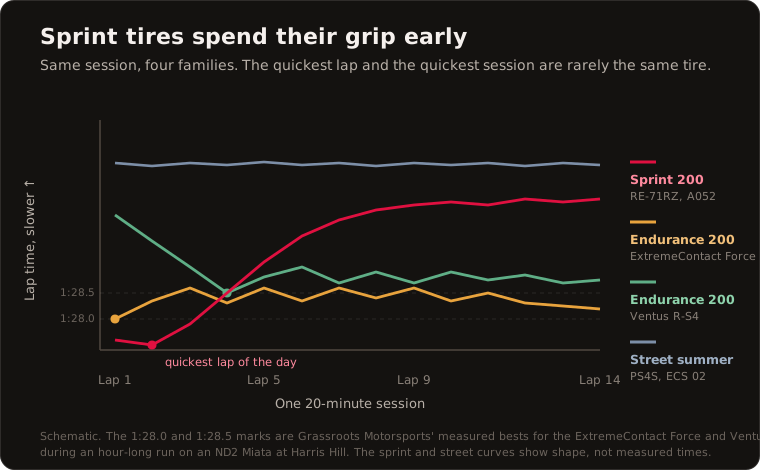
The street-tire limit is not theoretical. An ND2 owner on Pilot Sport 4S had to cruise every other lap “like qualifying in F1” at Monticello, and on a 60°F damp day the same set overheated after about three laps of each session.
Dropping a tier costs less than the price gap implies. A Miata owner who measured both logged 1.2 g on the Falken RT615K against 1.3 g on the RT660, with the 615 giving more feedback near the limit and being easier to correct. He runs the 660 for autocross and the 615 for casual lapping.
On stock suspension, a sprint 200 finds the bump stops before it lets go
Section titled “On stock suspension, a sprint 200 finds the bump stops before it lets go”A sprint 200TW raises the grip limit past the point where a stock ND stays composed. The car rolls until the outside rear lands on its bump stop, rear roll stiffness jumps, and load piles onto that tire. The rear then lets go at high cornering load with little warning, so on the street the car feels glued until it suddenly isn’t.

Mazda changed the rear stops for this. The RF and 2018+ soft tops got longer rear bump stops that come into play earlier, which Mazda said would make the transition to oversteer more predictable. A 2016–17 soft top has the original stops and is the worst case, and Flyin’ Miata’s replacement rear stops bring it closer to the later design. The longer stops soften the transition without removing it: Flyin’ Miata’s Keith Tanner ran a stock 2019 on 245 RE-71Rs and found it landing on the revised stops quickly, with a lot of roll. GRM’s 2016 test car rolled onto its rear stops in fast sweepers, and a stiffer front sway bar was their fix.
Breakaway depends on the setup as much as the compound. Testers describe it tire by tire, and it does not sort by family: GRM found the Hoosier R7 progressive and the A055 edgy at the rear on the same ND. Stiffer springs or a firmer front sway bar keep the car off the stops. On a stock car, a less sticky tire keeps the limit below them.
Before you buy
Section titled “Before you buy”- Measure what you have. 200-treadwear tires lose grip to heat cycles, not tread depth, so a set with tread left can still be done. Most mold at 7–9/32”.
- Summer compounds are done below 40–45°F. That includes every tire in the chart except the Blizzak.
- Set pressure by tire temperature, not by chart. Street 29 psi cold per the door placard; track and autocross targets are on track tire pressures.
- Break in a 200TW set before you compete on it. One gentle session, then rest 24 hours off the car. See autocross tires.
Related
Section titled “Related”- Autocross tires: cold grip, heat-cycle life in runs, break-in, classing
- Track tires: fade, graining, chunking, driving to the track
- Wheel and tire fitment · Lightweight wheels · Alignment