
ND1 vs ND2 vs ND3 Miata: Years and Differences
United States shorthand is ND1 2016–2018, ND2 2019–2023, ND3 2024+
Section titled “United States shorthand is ND1 2016–2018, ND2 2019–2023, ND3 2024+”The year and feature tables below use United States specifications. North America, Europe, Japan, and Australia adopted the newer 8.8-inch screen for 2024. Current Chilean and Peruvian listings still show 7-inch candidates, so an import’s infotainment must be classified by source market.
| Generation | Model years | Engine / redline | Headline change |
|---|---|---|---|
| ND1 | 2016–2018 | 155 hp, 6,800 rpm | the original 2.0, tilt-only wheel |
| ND2 | 2019–2023 | 181 hp, 7,500 rpm | reworked 2.0, telescoping wheel, KPC from 2022 |
| ND3 | 2024+ | 181 hp, 7,500 rpm | 8.8-inch screen, asymmetric LSD, retuned electronics |
Mazda badges all of them MX-5. Enthusiasts split the 2016-on run into three phases it never officially named, and the year ranges above are the practical boundaries. One mechanical jump matters most: ND1 to ND2, when the 2.0-liter went from 155 to 181 hp. The ND3 is a 2024 refresh of cabin and chassis electronics, not a new engine.
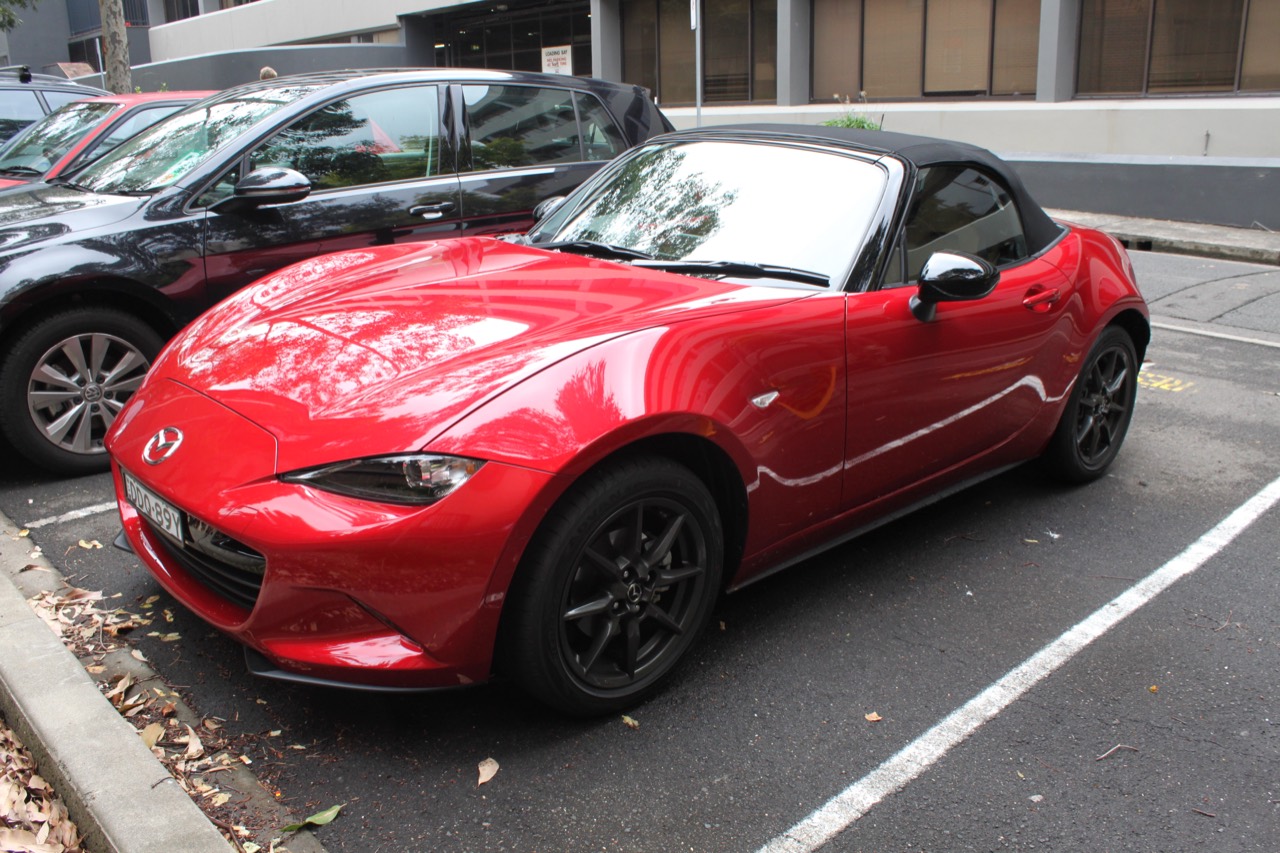 ND1 · 2016–2018
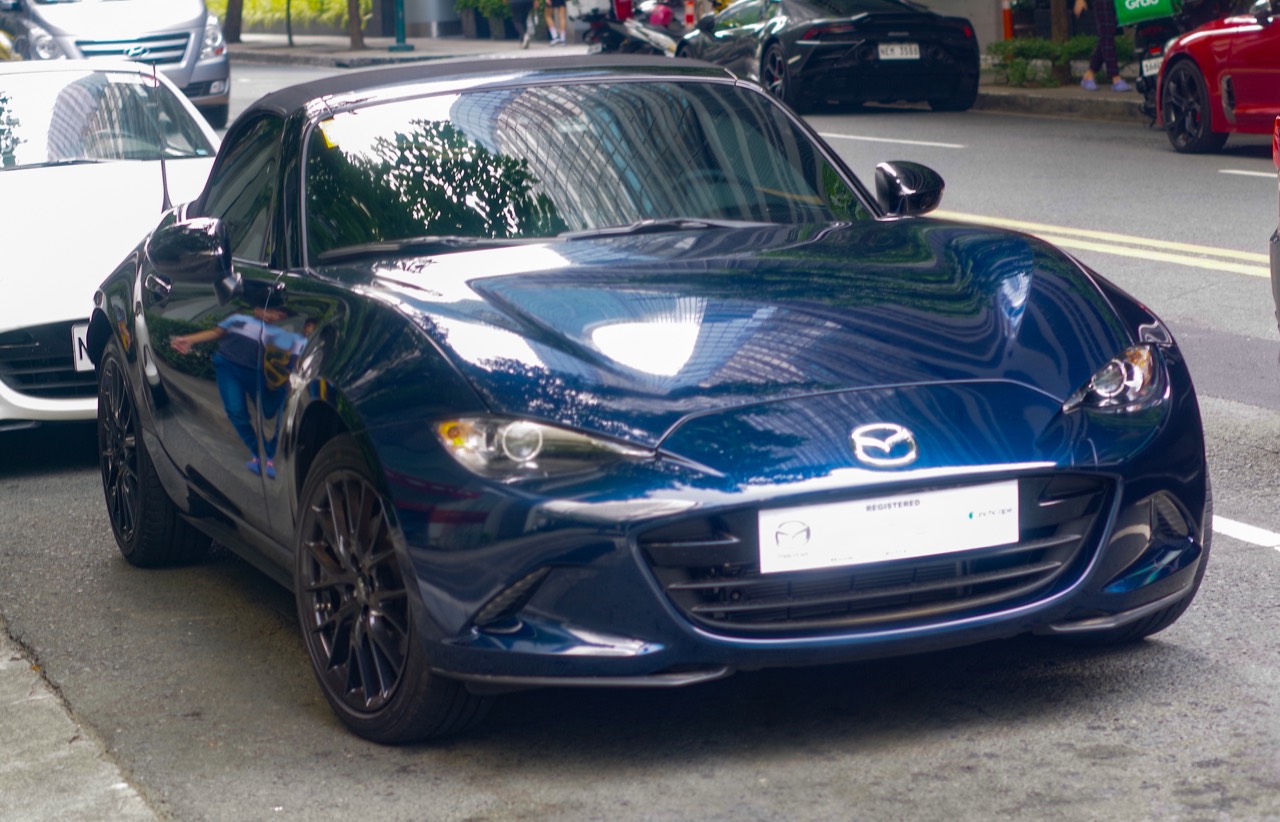 ND2 · 2019–2023
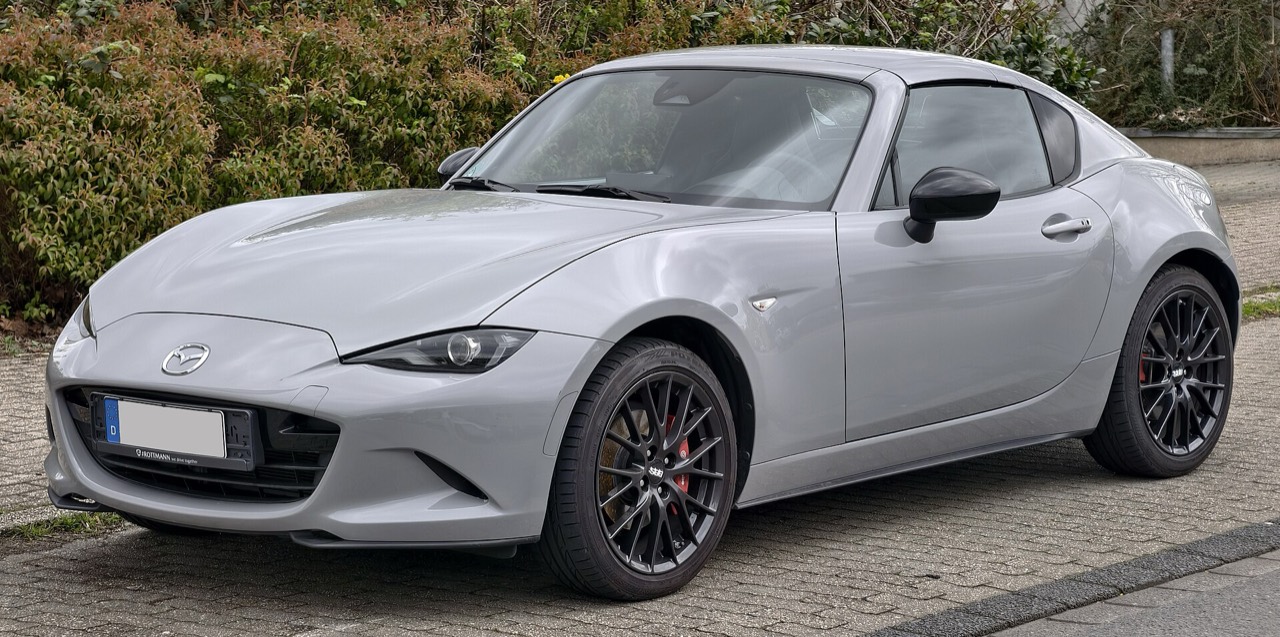 ND3 · 2024+
How to tell them apart
Section titled “How to tell them apart”From outside you mostly cannot tell an ND1 from an ND2. The reliable glance tells separate the ND3 from the rest; splitting ND1 from ND2 means looking in the cabin.
| Tell | ND1 | ND2 | ND3 |
|---|---|---|---|
| Center screen | 7-inch, narrow | 7-inch, narrow | 8.8-inch, wide |
| Lights | original signature | original signature | new ringed LED signature |
| Steering wheel | tilt only | pulls out (telescoping) | pulls out (telescoping) |
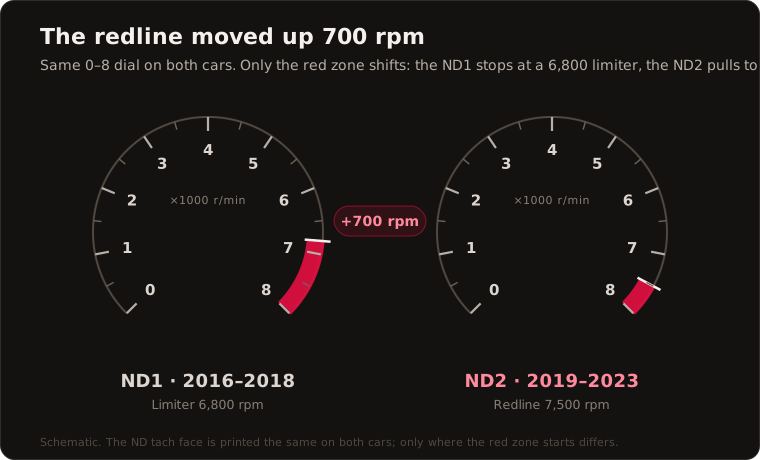
| Tach redline | 6,800 rpm limiter | 7,500 rpm | 7,500 rpm |
| KPC menu | absent | 2022–2023 only | present |
| CarPlay cable | wired or none | wired (wireless on 2021+ GT) | wireless, no cable |
The screen. The easiest tell: ND1 and ND2 share a 7-inch, 800×480 display perched on the dash, while the ND3 swaps it for an 8.8-inch widescreen with thinner bezels, obvious from the passenger seat.
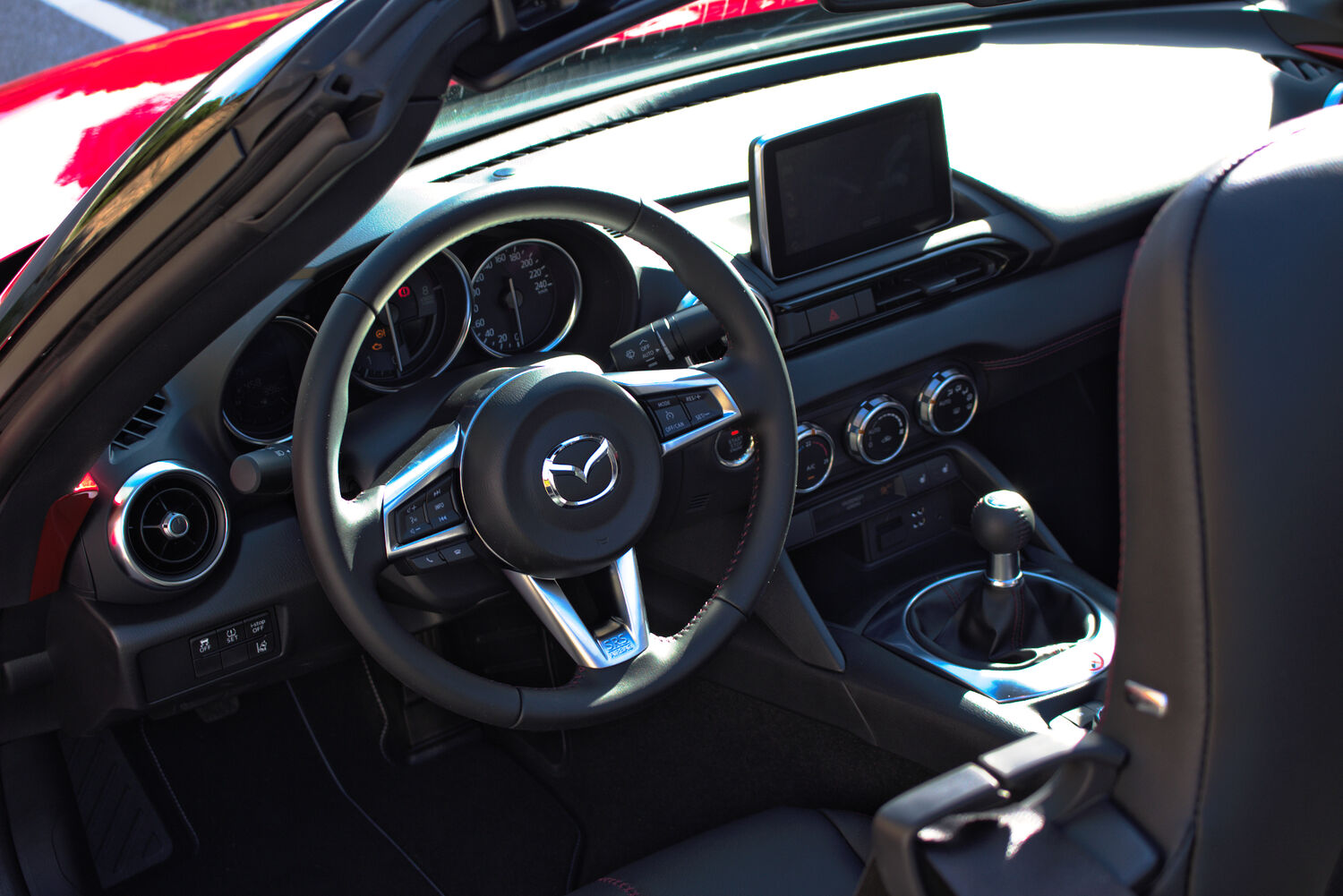 ND1 / ND2 · 7-inch
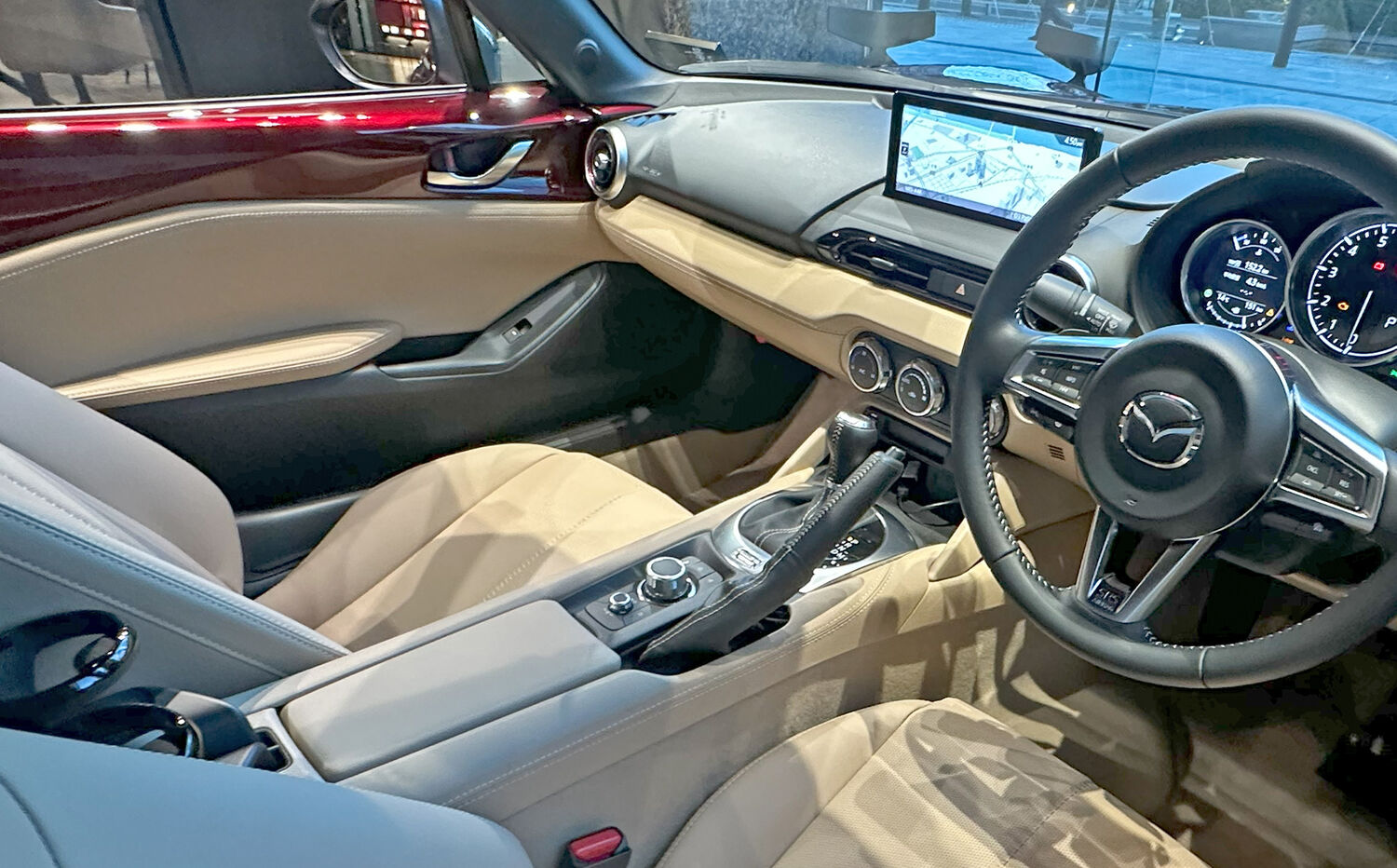 ND3 · 8.8-inch
The taillights. They spot an ND3 from behind: the 2016–2023 cars use a simple round LED element, while the ND3 adopts a ringed, layered signature, with a matching change to the front DRLs.
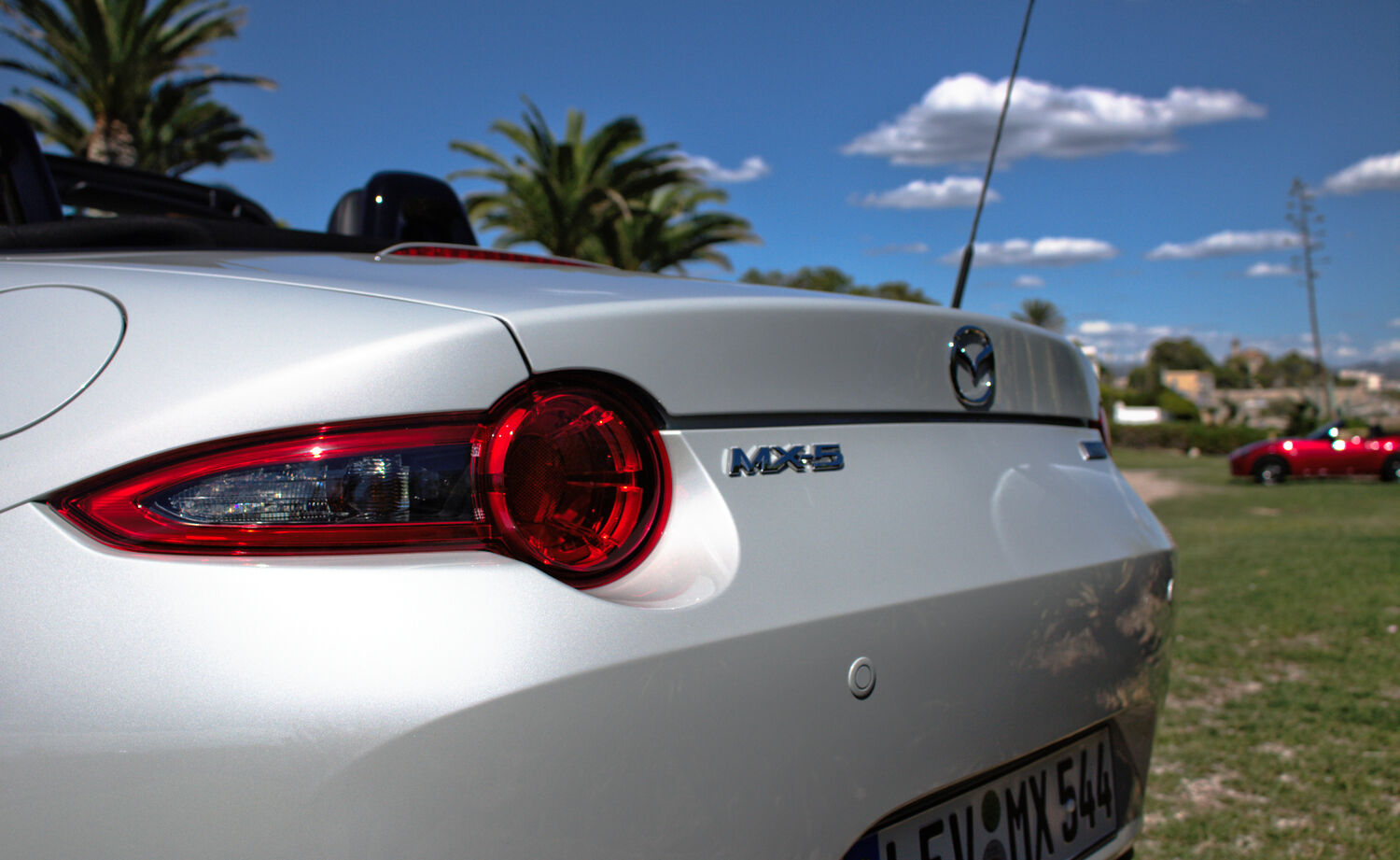 ND1 / ND2 taillight
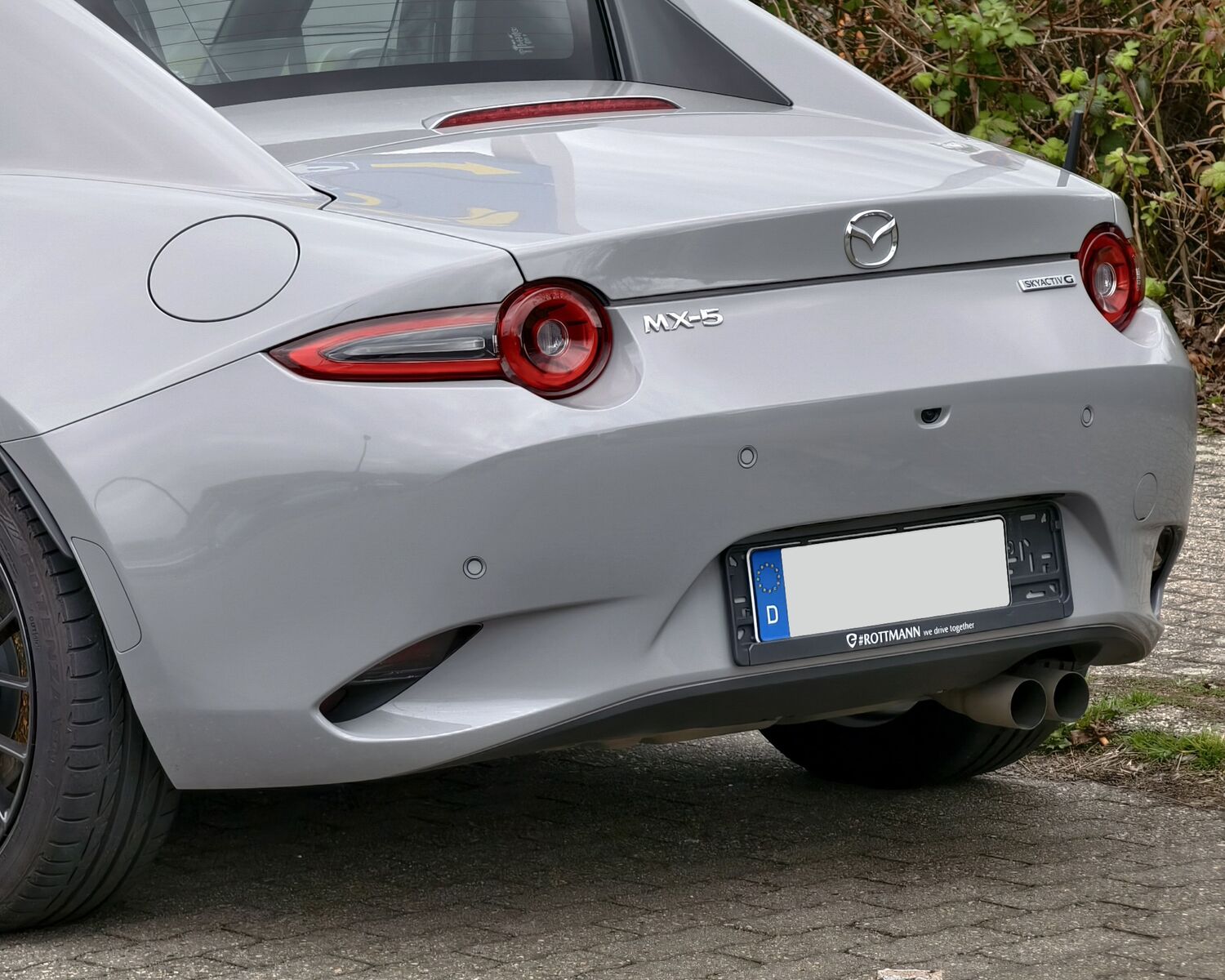 ND3 taillight
ND1 vs ND2. This one is a cabin job. Outside they are identical. Two tells inside: the wheel telescopes on an ND2 (pull it toward you; an ND1 wheel only tilts), and the redline moved from a 6,800 rpm limiter to 7,500 rpm. The dial difference is subtle and the 6,800 figure is not printed on the face, so the wheel is the faster check.
Which to buy
Section titled “Which to buy”For most enthusiasts, a 2022–2023 ND2: the 181 hp engine, the telescoping column, and Kinematic Posture Control, on the older 7-inch screen the modding community actually works with.
- Cheapest way in, weekend toy: an ND1. It is the value play and fine if you short-shift anyway. Budget for the non-telescoping column if you are tall, and check the build notes below.
- Best all-around, track or autocross: an ND2, ideally 2022–2023 for KPC. The pick for most enthusiasts.
- Modern interface, newest car, warranty: an ND3. Wireless CarPlay, the asymmetric LSD, and adaptive cruise on the automatic Grand Touring, at the cost of the tunable older screen.
Every US ND uses the 2.0-liter Skyactiv-G; the 1.5-liter never came here. The RF and soft top share the drivetrain across all years. Package choice can matter more for resale than the ND1/2/3 split: the Brembo/BBS package ran from the 2016 launch, and Recaro seats joined it for 2018. Deeper buying advice: the ND buying guide and best years.
The big jump is ND1 to ND2: the engine
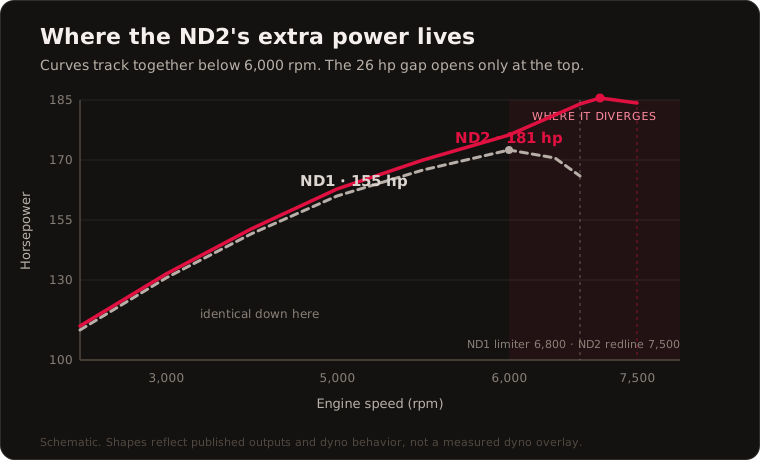
Section titled “The big jump is ND1 to ND2: the engine”For 2019 Mazda reworked the 2.0-liter rather than replacing it: lighter internals, a revised head, larger intake and exhaust valves, a dual-mass flywheel, and a higher 7,500 rpm redline. Output went from 155 hp to 181 hp, with peak power at 7,000 rpm. Reviewers called the result the sports car Mazda intended.
Two numbers, not one: 7,000 rpm is where it makes rated power, 7,500 rpm is where the limiter sits. The ND1 made its 155 hp at 6,000 rpm and hit its limiter by 6,800.
Below 6,000 rpm. The two engines are nearly identical there. The extra 26 hp lives almost entirely in the top ~1,500 rpm the ND1 never had. Short-shift and you may never feel it; wring it out, where track and autocross drivers spend their time, and the ND2 keeps pulling while the ND1 has gone flat. That is why owners describe the ND2 as the free-revving engine the ND1 should have shipped with.
The telescoping column. The other genuinely useful 2019 change is small: the wheel now telescopes as well as tilts. It fixes the ND1’s main driving-position complaint and lets taller drivers pull the wheel close without sliding the seat forward. For many buyers it decides the ND1-versus-ND2 question more than the horsepower does.
KPC, from 2022. Mid-ND2, the 2022 model year added Kinematic Posture Control. It is software, not new hardware: it lightly applies the inside-rear brake in hard cornering, using the rear suspension geometry to pull that corner down and cut body roll, working through the existing brakes and stability system. So a 2022–2023 ND2 has KPC; a 2019–2021 does not. KPC arrived during the ND2 run, not at the ND3, a common mix-up.
The ND3 (2024+): cabin and chassis, not engine
Section titled “The ND3 (2024+): cabin and chassis, not engine”The 2024 refresh leaves the 181 hp 2.0-liter alone, retuned for response but unchanged in output, and reworks what surrounds it.
- 8.8-inch screen. The 7-inch unit gives way to an 8.8-inch widescreen with a quicker interface. Apple CarPlay is now wireless and built in; Android Auto is built in but still wired. The older 7-inch Gen 6 Mazda Connect is the unit the screen-modding community (this site included) works with; the ND3 runs a newer platform.
- Asymmetric LSD. Manual cars get a limited-slip differential with different locking rates on- and off-throttle, for more stability on corner entry and less understeer on exit. Owners describe it as more progressive rotation, a refinement rather than a new character. Which trims got which diff is on the trim comparison and differential guide.
- DSC-Track mode. Manual cars gain a less-intrusive stability mode for track use, separate from full-off.
- Driver aids. Adaptive cruise arrives with the ND3, but only on the Grand Touring with the automatic transmission: Mazda’s pricing sheet gives Mazda Radar Cruise Control to the automatic Grand Touring alone. Every manual keeps conventional cruise control.
- Retuned steering and new lighting. Lower-friction electric power steering, and new LED light signatures front and rear.
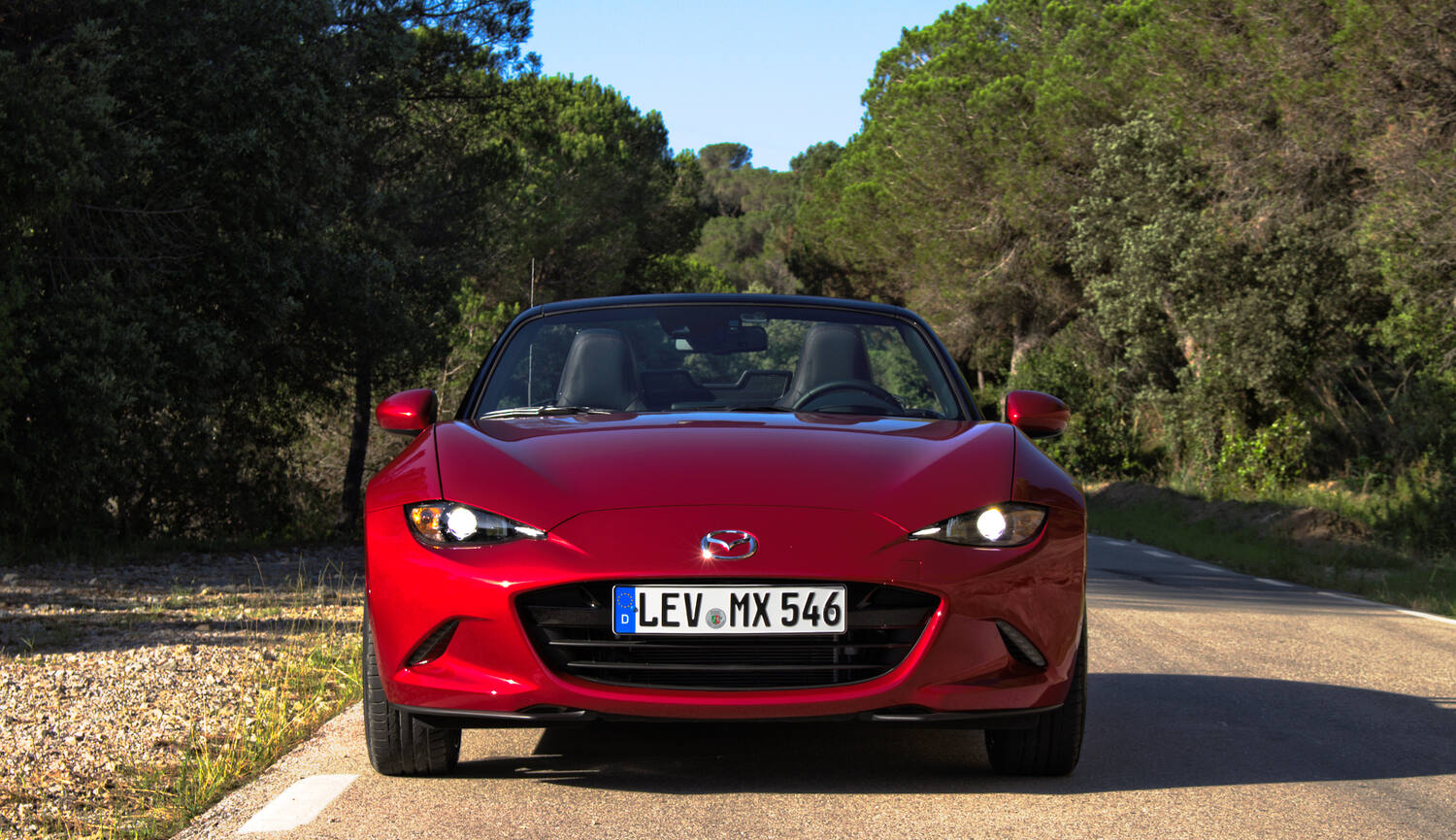 ND1 / ND2 front
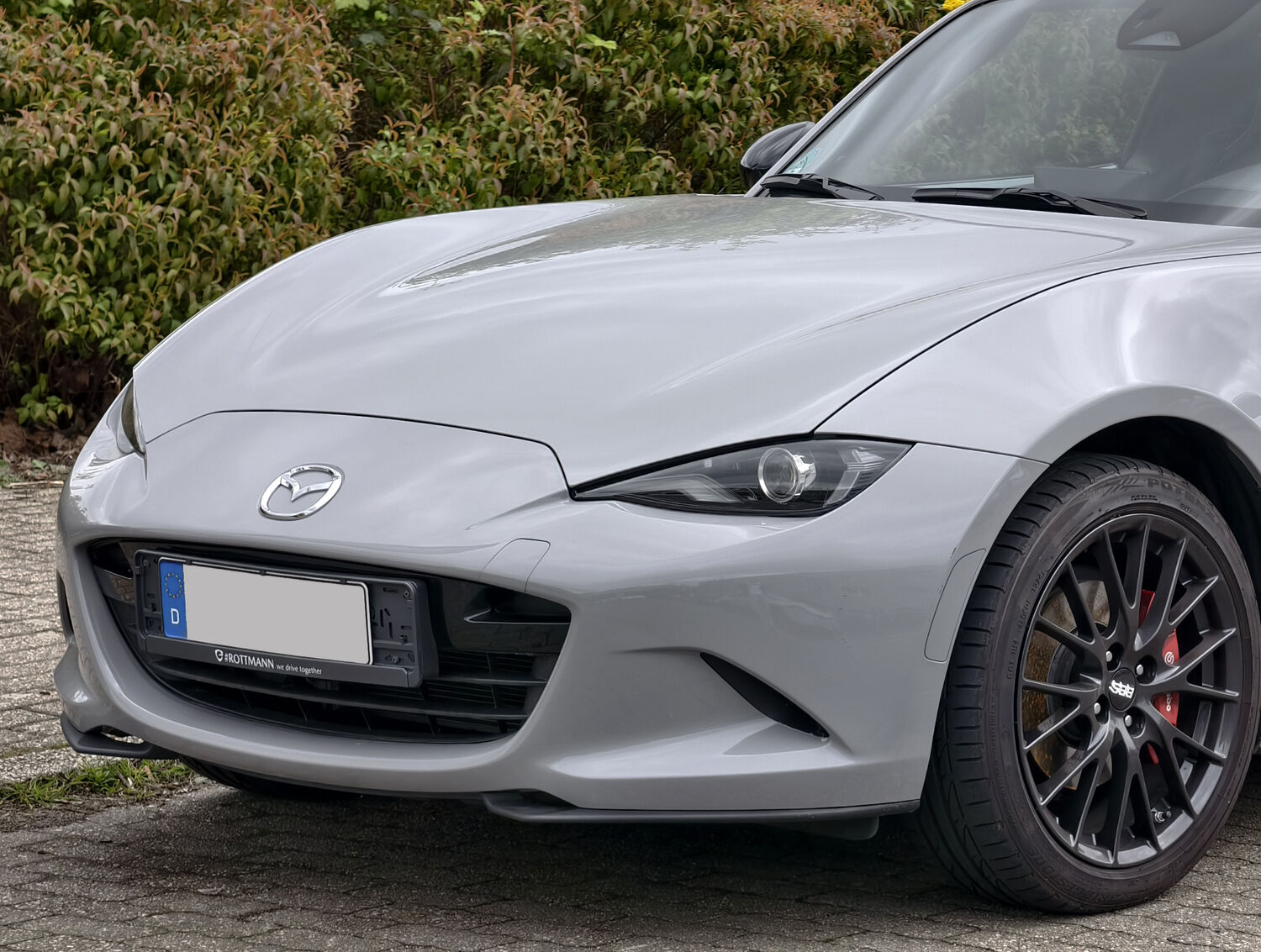 ND3 front
The ND3 keeps KPC and the telescoping column. Pick it for the modern interface, the newest chassis tuning, and a factory warranty. For the full refresh breakdown see what changed on the ND3.
Feature-by-feature
Section titled “Feature-by-feature”| Feature | ND1 (2016–2018) | ND2 (2019–2023) | ND3 (2024+) |
|---|---|---|---|
| Engine | 2.0L, 155 hp | 2.0L reworked, 181 hp | 2.0L carryover, 181 hp |
| Redline | 6,800 rpm | 7,500 rpm | 7,500 rpm |
| Steering column | tilt only | tilt + telescoping | tilt + telescoping |
| KPC | No | 2022–2023 only | Yes |
| Center screen | 7-inch, 800×480 | 7-inch, 800×480 | 8.8-inch widescreen |
| Apple CarPlay | wired retrofit | retrofit; factory standard 2021 | wireless, built in |
| Android Auto | wired retrofit | retrofit; factory standard 2021 | built in, wired |
| Limited-slip diff | open or conventional LSD by trim | open or conventional LSD by trim | asymmetric LSD (manual) |
| DSC-Track mode | No | No | Yes (manual) |
| Driver aids | basic | basic | adaptive cruise (automatic GT only) |
In the United States, CarPlay and Android Auto became standard equipment for 2021; a dealer retrofit existed for earlier cars.
Buying caveats by generation
Section titled “Buying caveats by generation”- ND1: check the build. The transmission and synchro complaints that follow the ND1 cluster on early 2016 cars and on boosted or tracked examples, not stock late-run ND1s. See reliability by year and mechanical issues.
- Late ND2 (2022–2023): third-gear feel. Some owners report a notchy third-gear engagement; a few had transmissions replaced under warranty. Drive one through the gears before buying.
- ND3 (2024–2025): DSC software recall. Mazda issued a stability-control warning-lamp software recall; it does not affect braking. Confirm the fix was applied.
Further reading
Section titled “Further reading”- Best ND years: which exact year to buy
- What changed on the ND3: the 2024+ refresh in detail
- ND MX-5 overview
- Reliability by year
- RF vs soft top
- Fiat 124 Spider vs ND